Anxiety Therapy in Albuquerque, NM
You shouldn't have to keep white-knuckling your way through the day. Compassionate, evidence-based anxiety therapy for children, teens, adults, couples, and families in Albuquerque and throughout New Mexico.
Most Insurances Accepted

Anxiety Therapy in Albuquerque, NM
You shouldn't have to keep white-knuckling your way through the day. Compassionate, evidence-based anxiety therapy for children, teens, adults, couples, and families in Albuquerque and throughout New Mexico.
Most Insurances Accepted
Introduction
You wake up at 2:14 AM, heart pounding, replaying the conversation you had with your boss. You spend Sunday nights bracing for Monday morning. You cancel plans because the thought of small talk makes your chest feel tight. You've told yourself "I just need to push through" for so long that you don't remember what calm actually feels like.
If any of that sounds familiar, you're not being dramatic. And you're not broken. What you're describing is anxiety — and it's one of the most treatable mental health concerns we work with at Rise Above Therapy.
We provide anxiety therapy in Albuquerque and online throughout New Mexico. Our therapists are trained in evidence-based approaches for generalized anxiety, panic disorder, social anxiety, health anxiety, relationship anxiety, and anxiety connected to past trauma. Most clients start feeling relief within their first 4-6 sessions.
Common Signs of Anxiety
Anxiety doesn't always look the way it does on TV. It's not always full-blown panic attacks or people crying in a corner. For a lot of our clients, it shows up quietly — as exhaustion, irritability, or "just not feeling like yourself." Some of the most common patterns we hear in the therapy room:
The Mind That Won't Turn Off
Racing thoughts. Rehearsing conversations that haven't happened. Waking up at 3 AM with your brain already halfway through tomorrow's to-do list. Feeling like you can't be present with your kids because you're mentally somewhere else.
The Body That Won't Relax
Tight chest. Shallow breathing. Jaw clenched so hard you get headaches. Stomach in knots before every meeting. Feeling wired-and-tired at the same time. Sometimes the physical symptoms show up before you even realize you're anxious.
The Panic That Comes Out of Nowhere
Sudden waves of dread. Heart racing. Feeling like you can't breathe. Convinced something is seriously wrong. Panic attacks often peak within 10 minutes but leave you shaken for days — and afraid of the next one.
The Avoidance
Cancelling plans. Avoiding phone calls. Taking the long way to skip a specific intersection. Saying no to opportunities that scare you. Anxiety gets bigger the more you avoid it — but avoiding it also feels like the only thing that helps in the moment.
The Constant Worry
About your kids. About your health. About money. About whether you said the wrong thing in that email. About whether your relationship is really okay. About whether the thing you're worrying about right now is even worth worrying about. Worry that feels like caring — until you realize it's stealing your life.

Types of Anxiety We Help With
Generalized Anxiety Disorder (GAD) — Persistent, uncontrollable worry about many areas of life (work, health, family, finances). Often accompanied by muscle tension, sleep problems, and difficulty concentrating.
Panic Disorder — Recurrent, unexpected panic attacks and persistent worry about having more attacks. Often leads to avoiding places where past panic attacks occurred.
Social Anxiety — Intense fear of judgment or embarrassment in social or performance situations. Can look like avoiding parties, dreading meetings, or being unable to speak up.
Health Anxiety — Preoccupation with the fear of having a serious illness, often accompanied by checking symptoms, seeking reassurance, or avoiding doctors.
Relationship Anxiety — Constant worry about whether your partner really loves you, whether the relationship will last, or whether you're doing something wrong.
Trauma-Related Anxiety — Anxiety that developed after a difficult or painful experience. Sometimes shows up as hypervigilance, flashbacks, or difficulty trusting.
Perinatal & Postpartum Anxiety — Overwhelming worry during pregnancy or after having a baby. Often involves intrusive thoughts, difficulty sleeping even when the baby sleeps, or fear something terrible will happen.
School Anxiety (Children & Teens) — Refusal to go to school, stomach aches on Sunday nights, tears at drop-off, or academic performance changes.
Life Transition Anxiety — Overwhelm during major changes: new job, move to Albuquerque, divorce, empty nest, retirement, grief.

Anxiety Therapy Approaches We Use
Our therapists use evidence-based approaches tailored to your needs and goals.
Anxiety isn't one thing, so treatment isn't one thing either. Our therapists are trained in multiple evidence-based modalities, and we match the approach to what's actually going on for you — not to a rigid protocol.
Cognitive Behavioral Therapy (CBT)
The most well-researched treatment for anxiety. CBT helps you identify the thought patterns that fuel anxiety, test them against reality, and build new responses. Especially effective for panic, social anxiety, and generalized anxiety.
Dialectical Behavior Therapy (DBT) Skills
DBT teaches concrete, learnable skills for tolerating distress, regulating emotion, and getting through the moments when anxiety feels unbearable. Especially useful when anxiety triggers big emotional reactions or self-destructive urges.
Somatic Therapy
Because anxiety lives in the body as much as the mind. Somatic approaches help you notice and release the physical patterns of anxiety — the held breath, the clenched jaw, the frozen shoulders — that talk therapy alone can't reach.
EMDR (Eye Movement Desensitization and Reprocessing)
When anxiety is rooted in past trauma or specific frightening memories, EMDR helps the brain reprocess those memories so they lose their emotional charge. Learn more about our EMDR therapy in Albuquerque.
Mindfulness & Nervous System Regulation
Practical, teachable tools for calming the nervous system, staying present, and interrupting the anxiety spiral in the moment. Woven into most of our work with anxious clients.
Trauma-Informed Care (Underlying Approach)
Every one of our therapists practices from a trauma-informed lens. That means we understand how past experiences shape present anxiety — and we move at your pace, never pushing you into anything that feels unsafe.
Anxiety Therapy For Every Stage of Life
Anxiety Therapy for Children
Kids don't always have the words for what they're feeling. Anxiety in children often looks like stomach aches, refusal to go to school, meltdowns, sleep issues, or clinginess. We use play, art, and age-appropriate skills-based approaches to help children build a language for their feelings and tools for managing them.
Anxiety Therapy for Teens
The teenage years are hard even without an anxiety disorder. When social media, academic pressure, identity questions, and a still-developing brain collide, anxiety can feel like it takes over. We meet teens where they are — no lecturing, no forcing — and help them build coping strategies that actually work in their real life.
Anxiety Therapy for Adults
Whether you've been managing anxiety your whole life or it showed up suddenly after a life change, adult anxiety therapy is about learning why your nervous system is stuck on high alert — and how to teach it to trust again.
Anxiety Therapy for Couples
When one partner's anxiety affects the whole relationship — through withdrawal, reassurance-seeking, avoidance, or conflict — couples therapy can help both partners understand what's happening and rebuild connection. Learn more about couples counseling in Albuquerque.
Anxiety Therapy for Families
Sometimes the whole family system reorganizes around one person's anxiety. Family therapy helps break unhelpful patterns and rebuild healthy ways of supporting each other.
What Anxiety Therapy Actually Looks Like
Your first call (15 minutes, free). You call or book online. We match you with a therapist based on your concerns, insurance, and scheduling. This is a chance for you to ask questions and make sure it feels like a fit before you commit.
Session 1 (60 minutes). Your therapist takes time to understand what you're struggling with, what you've already tried, what your goals are, and what's shaped your life so far. No pressure to share more than you're comfortable with.
Sessions 2-4. You and your therapist develop a shared understanding of your anxiety patterns and start building skills to interrupt them. Many clients notice small shifts within these first few sessions — sleeping a little better, catching an anxious thought before it spirals.
Sessions 5-12. The core work. Depending on your goals and approach, this might involve CBT restructuring, EMDR reprocessing, somatic exercises, or DBT skill-building. This is usually where the biggest changes happen.
Beyond. Some clients wrap up in 12 sessions. Others continue longer, especially when anxiety is connected to trauma or chronic patterns. There's no "right" length — we work together on what makes sense for you.
Insurance, Cost, & Logistics
Insurance we accept: Blue Cross Blue Shield of New Mexico, Presbyterian, UnitedHealthcare Medicaid & Commercial Plans.
Self-pay rates: Talk to our team about our self pay rates.
Session length: 50-60 minutes for individual therapy. Couples and family sessions may run longer.
Frequency: Most clients start with weekly sessions and taper to biweekly or monthly as they progress.
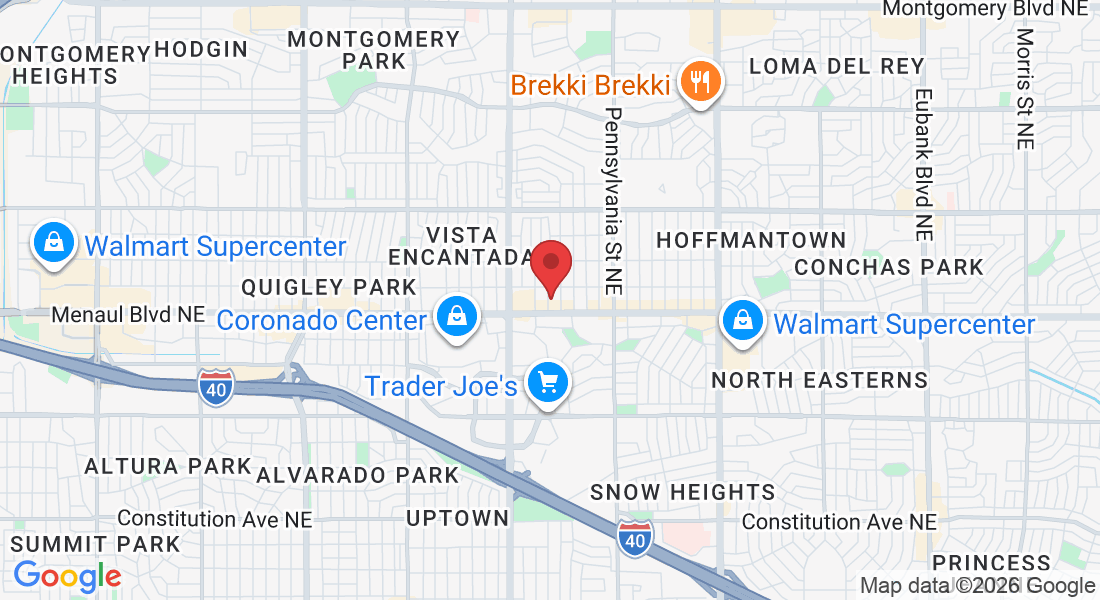
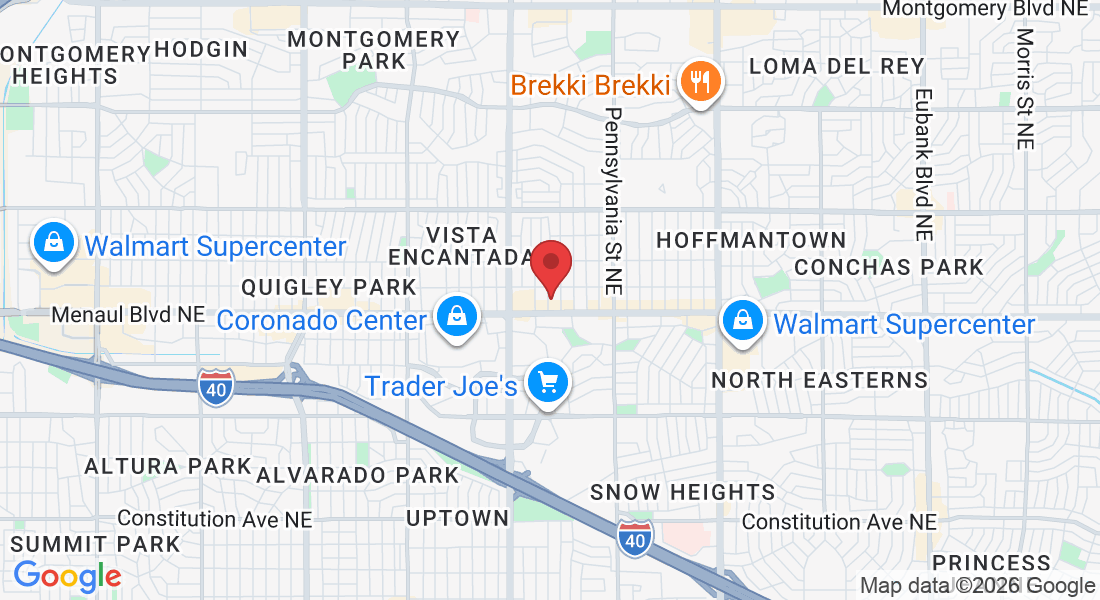
In-person location: 2616 Mesilla St NE, Albuquerque, NM 87110 (near Uptown, easy access from I-40 and I-25).
Online sessions: Available for anyone located in New Mexico, using a secure HIPAA-compliant telehealth platform.
Introduction
You wake up at 2:14 AM, heart pounding, replaying the conversation you had with your boss. You spend Sunday nights bracing for Monday morning. You cancel plans because the thought of small talk makes your chest feel tight. You've told yourself "I just need to push through" for so long that you don't remember what calm actually feels like.
If any of that sounds familiar, you're not being dramatic. And you're not broken. What you're describing is anxiety — and it's one of the most treatable mental health concerns we work with at Rise Above Therapy.
We provide anxiety therapy in Albuquerque and online throughout New Mexico. Our therapists are trained in evidence-based approaches for generalized anxiety, panic disorder, social anxiety, health anxiety,
relationship anxiety, and anxiety connected to past trauma. Most clients start feeling relief within their first 4-6 sessions.
Common Signs of Anxiety
Anxiety doesn't always look the way it does on TV. It's not always full-blown panic attacks or people crying in a corner. For a lot of our clients, it shows up quietly — as exhaustion, irritability, or "just not feeling like yourself." Some of the most common patterns we hear in the therapy room:
The Mind That Won't Turn Off
Racing thoughts. Rehearsing conversations that haven't happened. Waking up at 3 AM with your brain already halfway through tomorrow's to-do list. Feeling like you can't be present with your kids because you're mentally somewhere else.
The Body That Won't Relax
Tight chest. Shallow breathing. Jaw clenched so hard you get headaches. Stomach in knots before every meeting. Feeling wired-and-tired at the same time. Sometimes the physical symptoms show up before you even realize you're anxious.
The Panic That Comes Out of Nowhere
Sudden waves of dread. Heart racing. Feeling like you can't breathe. Convinced something is seriously wrong. Panic attacks often peak within 10 minutes but leave you shaken for days — and afraid of the next one.
The Avoidance
Cancelling plans. Avoiding phone calls. Taking the long way to skip a specific intersection. Saying no to opportunities that scare you. Anxiety gets bigger the more you avoid it — but avoiding it also feels like the only thing that helps in the moment.
The Constant Worry
About your kids. About your health. About money. About whether you said the wrong thing in that email. About whether your relationship is really okay. About whether the thing you're worrying about right now is even worth worrying about. Worry that feels like caring — until you realize it's stealing your life.
Types of Anxiety We Help With
Generalized Anxiety Disorder (GAD) — Persistent, uncontrollable worry about many areas of life (work, health, family, finances). Often accompanied by muscle tension, sleep problems, and difficulty concentrating.
Panic Disorder — Recurrent, unexpected panic attacks and persistent worry about having more attacks. Often leads to avoiding places where past panic attacks occurred.
Social Anxiety — Intense fear of judgment or embarrassment in social or performance situations. Can look like avoiding parties, dreading meetings, or being unable to speak up.
Health Anxiety — Preoccupation with the fear of having a serious illness, often accompanied by checking symptoms, seeking reassurance, or avoiding doctors.
Relationship Anxiety — Constant worry about whether your partner really loves you, whether the relationship will last, or whether you're doing something wrong.
Trauma-Related Anxiety — Anxiety that developed after a difficult or painful experience. Sometimes shows up as hypervigilance, flashbacks, or difficulty trusting.
Perinatal & Postpartum Anxiety — Overwhelming worry during pregnancy or after having a baby. Often involves intrusive thoughts, difficulty sleeping even when the baby sleeps, or fear something terrible will happen.
School Anxiety (Children & Teens) — Refusal to go to school, stomach aches on Sunday nights, tears at drop-off, or academic performance changes.
Life Transition Anxiety — Overwhelm during major changes: new job, move to Albuquerque, divorce, empty nest, retirement, grief.
Anxiety Therapy Approaches We Use
Our therapists use evidence-based approaches tailored to your needs and goals.
Anxiety isn't one thing, so treatment isn't one thing either. Our therapists are trained in multiple evidence-based modalities, and we match the approach to what's actually going on for you — not to a rigid protocol.
Cognitive Behavioral Therapy (CBT)
The most well-researched treatment for anxiety. CBT helps you identify the thought patterns that fuel anxiety, test them against reality, and build new responses. Especially effective for panic, social anxiety, and generalized anxiety.
Dialectical Behavior Therapy (DBT) Skills
DBT teaches concrete, learnable skills for tolerating distress, regulating emotion, and getting through the moments when anxiety feels unbearable. Especially useful when anxiety triggers big emotional reactions or self-destructive urges.
Somatic Therapy
Because anxiety lives in the body as much as the mind. Somatic approaches help you notice and release the physical patterns of anxiety — the held breath, the clenched jaw, the frozen shoulders — that talk therapy alone can't reach.
EMDR (Eye Movement Desensitization and Reprocessing)
When anxiety is rooted in past trauma or specific frightening memories, EMDR helps the brain reprocess those memories so they lose their emotional charge. Learn more about our EMDR therapy in Albuquerque.
Mindfulness & Nervous System Regulation
Practical, teachable tools for calming the nervous system, staying present, and interrupting the anxiety spiral in the moment. Woven into most of our work with anxious clients.
Trauma-Informed Care (Underlying Approach)
Every one of our therapists practices from a trauma-informed lens. That means we understand how past experiences shape present anxiety — and we move at your pace, never pushing you into anything that feels unsafe.

Why Choose Rise Above Therapy for Anxiety Therapy in Albuquerque?
-Licensed therapists specializing specifically in anxiety and trauma
-Full-scope practice: children, teens, adults, couples, and families all under one roof
-Both in-person (Albuquerque) and online (statewide NM) available
-Multiple evidence-based modalities so we can match the approach to your needs
-Most major insurances accepted
-Trauma-informed, culturally responsive care
-Convenient Uptown Albuquerque location serving Rio Rancho, Northeast Heights, Nob Hill, and surrounding areas
Why Choose Rise Above Therapy for Anxiety Therapy in Albuquerque?
-Licensed therapists specializing specifically in anxiety and trauma
-Full-scope practice: children, teens, adults, couples, and families all under one roof
-Both in-person (Albuquerque) and online (statewide NM) available
-Multiple evidence-based modalities so we can match the approach to your needs
-Most major insurances accepted
-Trauma-informed, culturally responsive care
-Convenient Uptown Albuquerque location serving Rio Rancho, Northeast Heights, Nob Hill, and surrounding areas
Frequently Asked Questions
How do I know if I actually need anxiety therapy or if I'm just stressed?
Stress is usually tied to a specific situation and resolves when the situation does. Anxiety tends to persist, feel disproportionate, and interfere with sleep, relationships, work, or daily functioning. If it's been weeks or months and it's not getting better on its own, therapy can help.
Do I need to be diagnosed with an anxiety disorder to get therapy?
No. You don't need a formal diagnosis to benefit from therapy. Many of our clients don't meet full diagnostic criteria for an anxiety disorder but still struggle with worry, overwhelm, or panic that gets in the way of the life they want.
How long does anxiety therapy usually take to work?
Most clients notice initial relief within 4-6 sessions and see meaningful change in 12-20 sessions. Trauma-related anxiety often takes longer. Every person is different, and we regularly check in about your progress.
Do I have to take medication to get better?
No. Therapy alone is often enough for many people with anxiety, especially with evidence-based approaches like CBT, EMDR, and somatic therapy. Some clients choose to combine therapy with medication from their doctor or psychiatrist — that's a decision you'd make with your prescriber, not with us.
Do you offer online anxiety therapy?
Yes. We offer secure online sessions via HIPAA-compliant telehealth to anyone located in New Mexico. Many clients find online therapy just as effective as in-person, especially for anxiety.
What if I've tried therapy before and it didn't work?
That's actually really common — and it usually means the approach wasn't the right match, not that therapy can't help. We use multiple evidence-based modalities and adjust based on what's working. If your last therapist mostly used talk therapy and it didn't stick, a body-based or EMDR-informed approach might reach what talk therapy couldn't.
Do you help with panic attacks specifically?
Yes. Panic disorder is one of the most treatable anxiety conditions, and we use CBT, exposure-based approaches, and somatic tools that have strong research support for reducing panic frequency and intensity. Many clients see significant improvement within 8-12 sessions.
Can you help with anxiety in kids or teens?
Yes. We work with children, teens, and their families. Anxiety in younger clients often looks different than in adults — physical complaints, school refusal, meltdowns — and we use age-appropriate approaches (play, art, skills-based work) that meet kids where they are.
Do you accept insurance for anxiety therapy?
Yes. We're in-network with Blue Cross Blue Shield of New Mexico, Presbyterian, and UnitedHealthcare Medicaid and Commercial Plans. Call us at (505) 588-7571 to verify your specific plan.
What if I'm not sure I'm ready for therapy?
That ambivalence is normal. The 15-minute consultation is designed for exactly this — you can ask questions, get a feel for whether it fits, and decide with no pressure. Many people say "I wish I'd called sooner" once they start.
Frequently Asked Questions
How do I know if I actually need anxiety therapy or if I'm just stressed?
Stress is usually tied to a specific situation and resolves when the situation does. Anxiety tends to persist, feel disproportionate, and interfere with sleep, relationships, work, or daily functioning. If it's been weeks or months and it's not getting better on its own, therapy can help.
Do I need to be diagnosed with an anxiety disorder to get therapy?
No. You don't need a formal diagnosis to benefit from therapy. Many of our clients don't meet full diagnostic criteria for an anxiety disorder but still struggle with worry, overwhelm, or panic that gets in the way of the life they want.
How long does anxiety therapy usually take to work?
Most clients notice initial relief within 4-6 sessions and see meaningful change in 12-20 sessions. Trauma-related anxiety often takes longer. Every person is different, and we regularly check in about your progress.
Do I have to take medication to get better?
No. Therapy alone is often enough for many people with anxiety, especially with evidence-based approaches like CBT, EMDR, and somatic therapy. Some clients choose to combine therapy with medication from their doctor or psychiatrist — that's a decision you'd make with your prescriber, not with us.
Do you offer online anxiety therapy?
Yes. We offer secure online sessions via HIPAA-compliant telehealth to anyone located in New Mexico. Many clients find online therapy just as effective as in-person, especially for anxiety.
What if I've tried therapy before and it didn't work?
That's actually really common — and it usually means the approach wasn't the right match, not that therapy can't help. We use multiple evidence-based modalities and adjust based on what's working. If your last therapist mostly used talk therapy and it didn't stick, a body-based or EMDR-informed approach might reach what talk therapy couldn't.
Do you help with panic attacks specifically?
Yes. Panic disorder is one of the most treatable anxiety conditions, and we use CBT, exposure-based approaches, and somatic tools that have strong research support for reducing panic frequency and intensity. Many clients see significant improvement within 8-12 sessions.
Can you help with anxiety in kids or teens?
Yes. We work with children, teens, and their families. Anxiety in younger clients often looks different than in adults — physical complaints, school refusal, meltdowns — and we use age-appropriate approaches (play, art, skills-based work) that meet kids where they are.
Do you accept insurance for anxiety therapy?
Yes. We're in-network with Blue Cross Blue Shield of New Mexico, Presbyterian, and UnitedHealthcare Medicaid and Commercial Plans. Call us at (505) 588-7571 to verify your specific plan.
What if I'm not sure I'm ready for therapy?
That ambivalence is normal. The 15-minute consultation is designed for exactly this — you can ask questions, get a feel for whether it fits, and decide with no pressure. Many people say "I wish I'd called sooner" once they start.
Ready to Take the Next Step Towards Healing and Self-Discovery? Let's Begin Your Journey Together.
You don't have to keep white-knuckling through the day. Anxiety is highly treatable, and the first step is smaller than you think.
Call (505) 588-7571 or book a free 15-minute consultation online. We'll match you with a therapist who fits your needs and schedule.
Ready to Take the Next Step Towards Healing and Self-Discovery? Let's Begin Your Journey Together.
You don't have to keep white-knuckling through the day. Anxiety is highly treatable, and the first step is smaller than you think.
Call (505) 588-7571 or book a free 15-minute consultation online. We'll match you with a therapist who fits your needs and schedule.