Trauma Therapy in Albuquerque, NM
You don't have to keep carrying this alone. Compassionate, trauma-informed therapy for children, teens, adults, couples, and families in Albuquerque and throughout New Mexico — including EMDR, somatic therapy, and specialized care for PTSD and complex trauma.
Most Insurances Accepted

Trauma Therapy in Albuquerque, NM
You don't have to keep carrying this alone. Compassionate, trauma-informed therapy for children, teens, adults, couples, and families in Albuquerque and throughout New Mexico — including EMDR, somatic therapy, and specialized care for PTSD and complex trauma.
Most Insurances Accepted
Introduction - Healing From What Hurt You Is Possible
Maybe you know exactly what happened. Maybe you spent years telling yourself it "wasn't that bad." Maybe you can't remember most of it — you just know something's off. However you got here, you're carrying something that keeps showing up in your relationships, your sleep, your body, your reactions. And no matter how much you've tried to logic your way out of it, it hasn't worked.
That's not a personal failing. Trauma isn't stored in the part of your brain that responds to logic. It's stored in your nervous system, your body, and the automatic patterns you developed to survive. Healing requires a different kind of work than "just thinking about it differently."
At Rise Above Therapy, we provide trauma-informed therapy in Albuquerque and online throughout New Mexico. Our therapists are trained in evidence-based approaches designed specifically for trauma — including EMDR, somatic therapy, and other body-based modalities — and we work at your pace. You never have to share more than you're ready to share.
Common Signs of Trauma
What Trauma Actually Looks Like — Even Years Later
Trauma doesn't always look like flashbacks and nightmares. For a lot of our clients, it shows up in patterns they didn't even connect to trauma at first — chronic tension, difficulty trusting, feeling constantly "on," or finding themselves in the same relationship dynamics again and again. Some of the most common ways it presents:
The Hypervigilance That Never Turns Off
Always scanning the room for exits. Startling at small sounds. Feeling on edge even when you're objectively safe. Sitting with your back to the wall in restaurants. Reading people's tone of voice for danger even when the conversation is casual.
The Body That Remembers Even When Your Mind Doesn't
Chronic tension in your jaw, shoulders, or stomach. Tension headaches. Sleep problems you can't explain. Autoimmune flares that follow stress. Physical reactions to certain smells, sounds, or situations before you consciously register what triggered them.
The Numbness and Disconnection
Feeling detached from your body, your emotions, or the people around you. Going through the motions of your life like you're watching from behind glass. Not being able to feel joy fully — or grief. A sense that you're just "not really here."
The Triggers You Can't Predict
A song. A cologne. Someone's tone of voice. A specific season of the year. Something small sends you into a spiral you can't logic your way out of. You know the response is disproportionate to the moment, but that doesn't stop it.
The Relationship Patterns You Keep Repeating
Either you can't let anyone close, or you get enmeshed too fast. You keep picking partners who feel familiar in ways that end up hurting you. You have trouble trusting even the people who've earned it. Small conflicts feel enormous.
The Shame That Says It Was Your Fault
"I should be over this by now." "Other people had it worse." "I'm just too sensitive." "Why can't I just move on?" Trauma often comes with an internal critic that blames you for surviving the way you had to. That voice is a symptom of the trauma — not the truth about you.

Types of Trauma We Help With
Trauma isn't one thing. It comes from many different kinds of experiences — some sudden and identifiable, some quiet and cumulative. Our therapists work with clients across the full range:
Interpersonal Trauma
Childhood trauma — Adverse experiences in your family of origin, including neglect, invalidation, or growing up with a parent who was ill, addicted, or unavailable.
Emotional abuse — Chronic criticism, gaslighting, manipulation, or being made to feel worthless by someone who was supposed to love you.
Physical abuse — Any experience of physical harm at the hands of a caregiver, partner, or another person in a position of power.
Sexual abuse and assault — At any age, including experiences you may have minimized or not identified as abuse until years later.
Domestic violence — Whether physical, emotional, financial, or coercive control.
Narcissistic abuse — Long-term exposure to a narcissistic partner, parent, or family member. Includes the specific patterns of gaslighting, love-bombing, devaluation, and discard.
Loss and Grief-Related Trauma
Grief — After the death of someone close to you, especially when the loss was sudden, traumatic, or complicated.
Divorce and relationship trauma — Including the trauma of infidelity, betrayal, or a partner leaving without warning.
Pregnancy loss — Miscarriage, stillbirth, or termination for medical reasons.
Situational Trauma
Medical trauma — Serious illness, difficult diagnoses, medical procedures, or being treated poorly in a medical setting. Includes birth trauma.
Car accidents and other accidents — Especially when you thought you might die or watched someone else be hurt.
Natural disaster or violence — Fires, floods, shootings, community violence.
Systemic and Cumulative Trauma
Religious trauma — Being shaped by high-control religious environments, purity culture, or spiritual abuse.
Military trauma — Combat, deployment, military sexual trauma, or the impact of service on your family.
Racial or cultural trauma — The cumulative impact of discrimination, marginalization, or intergenerational trauma.
PTSD and Complex PTSD (CPTSD) — Whether from a single event or from prolonged exposure to painful experiences over time.
Life Transition Trauma
Traumatic life changes — Sudden job loss, forced relocation, betrayal by trusted institutions, or any experience that shattered your sense of how the world works.

How We Approach Trauma Treatment
Talk therapy alone often isn't enough for trauma — because trauma lives in the body and nervous system, not just the mind. Our therapists use multiple evidence-based, trauma-specialized modalities and match the approach to your specific needs.
EMDR (Eye Movement Desensitization and Reprocessing)
One of the most well-researched trauma therapies in existence. EMDR uses bilateral stimulation (typically eye movements) to help your brain reprocess traumatic memories so they lose their emotional charge. You don't have to talk in detail about what happened for EMDR to work. Many clients see meaningful shifts within 8-12 sessions. Learn more about our EMDR therapy in Albuquerque.
Somatic Therapy
Because trauma lives in the body, releasing it requires working with the body. Somatic approaches help you notice the physical patterns of trauma — held breath, chronic tension, freeze responses — and gently release them. Especially effective for clients who feel stuck in their bodies or disconnected from their physical experience.
Trauma-Focused Cognitive Behavioral Therapy (TF-CBT)
An adaptation of standard CBT specifically for trauma. Helps you identify and change trauma-driven thought patterns while building coping skills for triggers, flashbacks, and hypervigilance. Especially well-researched for children and teens.
Internal Family Systems (IFS) / Parts Work
Trauma often creates "parts" of you that operate on old survival patterns — the protector, the wounded child, the inner critic. IFS helps you understand these parts, meet them with compassion, and integrate them so they stop running your life.
Attachment-Based Therapy
When trauma happened in early relationships (or affected your ability to form them), attachment-based work helps you build the internal experience of safety and connection that early trauma disrupted.
Trauma-Informed Care (Underlying Approach)
Every therapist at Rise Above practices from a trauma-informed lens. That means we prioritize safety, choice, and pacing. You're in control of what you share and when. Nothing gets forced, ever.
Trauma Therapy for Every Stage of Life
Trauma Therapy for Children
Children don't process trauma the way adults do — they show it through behavior, play, physical symptoms, or regression. We use developmentally appropriate approaches (including TF-CBT and play-based therapy) to help children process what happened while working closely with parents to support healing at home.
Trauma Therapy for Teens
Teens who've experienced trauma often struggle with mood swings, self-harm urges, substance use, academic decline, or difficulty in relationships. We meet teens where they are — no pressure, no lecturing — and help them build skills for regulating their nervous systems and processing what happened at their own pace.
Trauma Therapy for Adults
Whether your trauma is recent or from decades ago, adult trauma therapy is about giving your nervous system what it didn't get at the time — safety, choice, pacing, and the space to feel what you couldn't feel then. Healing at any age is possible.
Trauma Therapy for Couples
Trauma affects relationships in specific ways — trust issues, sexual difficulties, emotional distance, conflict escalation. When one partner is healing from trauma (or when the couple experienced trauma together, like infidelity or loss), couples therapy can help both partners understand what's happening and rebuild connection. Learn more about couples counseling in Albuquerque.
Trauma Therapy for Families
Sometimes the whole family system reorganized around one person's trauma — or the family experienced trauma together. Family therapy helps break unhelpful patterns, rebuild trust, and support each member's healing.
Insurance, Cost, and Logistics
Insurance we accept: Blue Cross Blue Shield of New Mexico, Presbyterian, UnitedHealthcare Medicaid & Commercial Plans.
Self-pay rates: Contact our team to discuss self-pay rates.
Session length: 50-60 minutes for individual therapy. EMDR sessions can run 60-90 minutes. Couples and family sessions may run longer.
Frequency: Most clients start with weekly sessions and taper to biweekly or monthly as they progress.
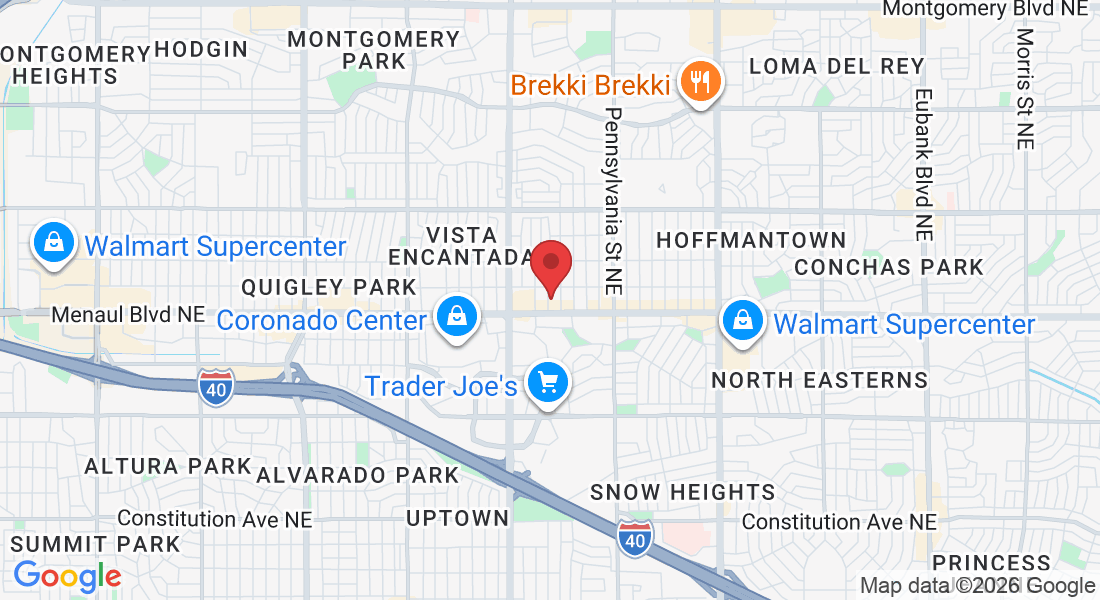
In-person location: 2616 Mesilla St NE, Albuquerque, NM 87110 (near Uptown, easy access from I-40 and I-25).
Online sessions: Available for anyone located in New Mexico via secure HIPAA-compliant telehealth. Many trauma clients find online sessions helpful — being in your own space can feel safer than an office.
Introduction
Healing From What Hurt You Is Possible
Maybe you know exactly what happened. Maybe you spent years telling yourself it "wasn't that bad." Maybe you can't remember most of it — you just know something's off. However you got here, you're carrying something that keeps showing up in your relationships, your sleep, your body, your reactions. And no matter how much you've tried to logic your way out of it, it hasn't worked.
That's not a personal failing. Trauma isn't stored in the part of your brain that responds to logic. It's stored in your nervous system, your body, and the automatic patterns you developed to survive. Healing requires a different kind of work than "just thinking about it differently."
At Rise Above Therapy, we provide trauma-informed therapy in Albuquerque and online throughout New Mexico. Our therapists are trained in evidence-based approaches designed specifically for trauma — including EMDR, somatic therapy, and other body-based modalities — and we work at your pace. You never have to share more than you're ready to share.
Common Signs of Trauma
What Trauma Actually Looks Like — Even Years Later
Trauma doesn't always look like flashbacks and nightmares. For a lot of our clients, it shows up in patterns they didn't even connect to trauma at first — chronic tension, difficulty trusting, feeling constantly "on," or finding themselves in the same relationship dynamics again and again. Some of the most common ways it presents:
The Hypervigilance That Never Turns Off
Always scanning the room for exits. Startling at small sounds. Feeling on edge even when you're objectively safe. Sitting with your back to the wall in restaurants. Reading people's tone of voice for danger even when the conversation is casual.
The Body That Remembers Even When Your Mind Doesn't
Chronic tension in your jaw, shoulders, or stomach. Tension headaches. Sleep problems you can't explain. Autoimmune flares that follow stress. Physical reactions to certain smells, sounds, or situations before you consciously register what triggered them.
The Numbness and Disconnection
Feeling detached from your body, your emotions, or the people around you. Going through the motions of your life like you're watching from behind glass. Not being able to feel joy fully — or grief. A sense that you're just "not really here."
The Triggers You Can't Predict
A song. A cologne. Someone's tone of voice. A specific season of the year. Something small sends you into a spiral you can't logic your way out of. You know the response is disproportionate to the moment, but that doesn't stop it.
The Relationship Patterns You Keep Repeating
Either you can't let anyone close, or you get enmeshed too fast. You keep picking partners who feel familiar in ways that end up hurting you. You have trouble trusting even the people who've earned it. Small conflicts feel enormous.
The Shame That Says It Was Your Fault
"I should be over this by now." "Other people had it worse." "I'm just too sensitive." "Why can't I just move on?" Trauma often comes with an internal critic that blames you for surviving the way you had to. That voice is a symptom of the trauma — not the truth about you.
Types of Trauma We Help With
Trauma isn't one thing. It comes from many different kinds of experiences — some sudden and identifiable, some quiet and cumulative. Our therapists work with clients across the full range:
Interpersonal Trauma
Childhood trauma — Adverse experiences in your family of origin, including neglect, invalidation, or growing up with a parent who was ill, addicted, or unavailable.
Emotional abuse — Chronic criticism, gaslighting, manipulation, or being made to feel worthless by someone who was supposed to love you.
Physical abuse — Any experience of physical harm at the hands of a caregiver, partner, or another person in a position of power.
Sexual abuse and assault — At any age, including experiences you may have minimized or not identified as abuse until years later.
Domestic violence — Whether physical, emotional, financial, or coercive control.
Narcissistic abuse — Long-term exposure to a narcissistic partner, parent, or family member. Includes the specific patterns of gaslighting, love-bombing, devaluation, and discard.
Loss and Grief-Related Trauma
Grief — After the death of someone close to you, especially when the loss was sudden, traumatic, or complicated.
Divorce and relationship trauma — Including the trauma of infidelity, betrayal, or a partner leaving without warning.
Pregnancy loss — Miscarriage, stillbirth, or termination for medical reasons.
Situational Trauma
Medical trauma — Serious illness, difficult diagnoses, medical procedures, or being treated poorly in a medical setting. Includes birth trauma.
Car accidents and other accidents — Especially when you thought you might die or watched someone else be hurt.
Natural disaster or violence — Fires, floods, shootings, community violence.
Systemic and Cumulative Trauma
Religious trauma — Being shaped by high-control religious environments, purity culture, or spiritual abuse.
Military trauma — Combat, deployment, military sexual trauma, or the impact of service on your family.
Racial or cultural trauma — The cumulative impact of discrimination, marginalization, or intergenerational trauma.
PTSD and Complex PTSD (CPTSD) — Whether from a single event or from prolonged exposure to painful experiences over time.
Life Transition Trauma
Traumatic life changes — Sudden job loss, forced relocation, betrayal by trusted institutions, or any experience that shattered your sense of how the world works.
How We Approach Trauma Treatment
Talk therapy alone often isn't enough for trauma — because trauma lives in the body and nervous system, not just the mind. Our therapists use multiple evidence-based, trauma-specialized modalities and match the approach to your specific needs.
EMDR (Eye Movement Desensitization and Reprocessing)
One of the most well-researched trauma therapies in existence. EMDR uses bilateral stimulation (typically eye movements) to help your brain reprocess traumatic memories so they lose their emotional charge. You don't have to talk in detail about what happened for EMDR to work. Many clients see meaningful shifts within 8-12 sessions. Learn more about our EMDR therapy in Albuquerque.
Somatic Therapy
Because trauma lives in the body, releasing it requires working with the body. Somatic approaches help you notice the physical patterns of trauma — held breath, chronic tension, freeze responses — and gently release them. Especially effective for clients who feel stuck in their bodies or disconnected from their physical experience.
Trauma-Focused Cognitive Behavioral Therapy (TF-CBT)
An adaptation of standard CBT specifically for trauma. Helps you identify and change trauma-driven thought patterns while building coping skills for triggers, flashbacks, and hypervigilance. Especially well-researched for children and teens.
Internal Family Systems (IFS) / Parts Work
Trauma often creates "parts" of you that operate on old survival patterns — the protector, the wounded child, the inner critic. IFS helps you understand these parts, meet them with compassion, and integrate them so they stop running your life.
Attachment-Based Therapy
When trauma happened in early relationships (or affected your ability to form them), attachment-based work helps you build the internal experience of safety and connection that early trauma disrupted.
Trauma-Informed Care (Underlying Approach)
Every therapist at Rise Above practices from a trauma-informed lens. That means we prioritize safety, choice, and pacing. You're in control of what you share and when. Nothing gets forced, ever.
Trauma Therapy for Every Stage of Life
Trauma Therapy for Children
Children don't process trauma the way adults do — they show it through behavior, play, physical symptoms, or regression. We use developmentally appropriate approaches (including TF-CBT and play-based therapy) to help children process what happened while working closely with parents to support healing at home.
Trauma Therapy for Teens
Teens who've experienced trauma often struggle with mood swings, self-harm urges, substance use, academic decline, or difficulty in relationships. We meet teens where they are — no pressure, no lecturing — and help them build skills for regulating their nervous systems and processing what happened at their own pace.
Trauma Therapy for Adults
Whether your trauma is recent or from decades ago, adult trauma therapy is about giving your nervous system what it didn't get at the time — safety, choice, pacing, and the space to feel what you couldn't feel then. Healing at any age is possible.
Trauma Therapy for Couples
Trauma affects relationships in specific ways — trust issues, sexual difficulties, emotional distance, conflict escalation. When one partner is healing from trauma (or when the couple experienced trauma together, like infidelity or loss), couples therapy can help both partners understand what's happening and rebuild connection. Learn more about couples counseling in Albuquerque.
Trauma Therapy for Families
Sometimes the whole family system reorganized around one person's trauma — or the family experienced trauma together. Family therapy helps break unhelpful patterns, rebuild trust, and support each member's healing.
Insurance, Cost, and Logistics
Insurance we accept: Blue Cross Blue Shield of New Mexico, Presbyterian, UnitedHealthcare Medicaid & Commercial Plans.
Self-pay rates: Contact our team to discuss self-pay rates.
Session length: 50-60 minutes for individual therapy. EMDR sessions can run 60-90 minutes. Couples and family sessions may run longer.
Frequency: Most clients start with weekly sessions and taper to biweekly or monthly as they progress.
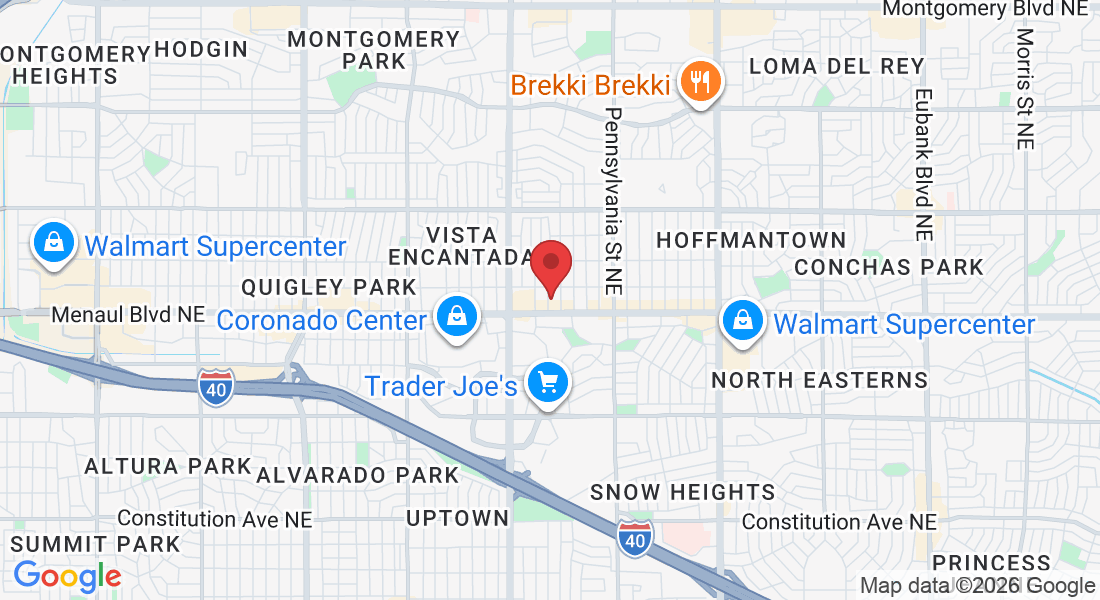
In-person location: 2616 Mesilla St NE, Albuquerque, NM 87110 (near Uptown, easy access from I-40 and I-25).
Online sessions: Available for anyone located in New Mexico via secure HIPAA-compliant telehealth. Many trauma clients find online sessions helpful — being in your own space can feel safer than an office.
Why Choose Rise Above Therapy for Trauma

-Therapists specializing specifically in trauma and trauma-informed care
-EMDR-trained clinicians on staff
-Multiple evidence-based modalities so we can match the approach to your needs
-Full-scope practice: children, teens, adults, couples, and families
-Both in-person (Albuquerque) and online (statewide NM) available
-Most major insurances accepted
-Warm, nonjudgmental, culturally responsive care
-Convenient Uptown Albuquerque location serving Rio Rancho, Northeast Heights, Nob Hill, and surrounding areas
-We move at your pace — you're always in control of what you share and when
What Trauma Therapy Actually Looks Like
Your first call (15 minutes, free).
You call or book online. We match you with a therapist based on your concerns, the type of trauma you're working with, insurance, and scheduling. This is a chance for you to ask questions before committing.
Session 1 (60 minutes).
We focus on helping you feel safe and understood. Your therapist takes time to learn about what you're struggling with, what support you're looking for, and your goals — without asking you to disclose more than you're ready to share. You never have to describe traumatic events in detail before you're ready. Ever.
Sessions 2-6 (Stabilization).
Before processing trauma, we build the foundation: coping skills for triggers, tools for regulating your nervous system, and a sense of safety in the therapy room. Many clients notice they're sleeping better, handling triggers with more control, or feeling more present within these first sessions.
Sessions 7-24 (Processing).
Once stabilization is in place, we begin the deeper work — using EMDR, somatic approaches, parts work, or whatever's the right fit. This is where clients often notice the biggest changes: memories that used to be triggering start to feel neutral, patterns that felt automatic start to shift, and self-compassion begins to replace shame.
Beyond (Integration).
Trauma therapy isn't a fixed length — some clients wrap up in 6 months, others continue for a year or more. There's no "right" pace. What matters is that you're moving toward the life you want at a pace that feels sustainable.
Why Choose Rise Above Therapy for Trauma
-Therapists specializing specifically in trauma and trauma-informed care
-EMDR-trained clinicians on staff
-Multiple evidence-based modalities so we can match the approach to your needs
-Full-scope practice: children, teens, adults, couples, and families
-Both in-person (Albuquerque) and online (statewide NM) available
-Most major insurances accepted
-Warm, nonjudgmental, culturally responsive care
-Convenient Uptown Albuquerque location serving Rio Rancho, Northeast Heights, Nob Hill, and surrounding areas
-We move at your pace — you're always in control of what you share and when
What Trauma Therapy Actually Looks Like
Your first call (15 minutes, free).
You call or book online. We match you with a therapist based on your concerns, the type of trauma you're working with, insurance, and scheduling. This is a chance for you to ask questions before committing.
Session 1 (60 minutes).
We focus on helping you feel safe and understood. Your therapist takes time to learn about what you're struggling with, what support you're looking for, and your goals — without asking you to disclose more than you're ready to share. You never have to describe traumatic events in detail before you're ready. Ever.
Sessions 2-6 (Stabilization).
Before processing trauma, we build the foundation: coping skills for triggers, tools for regulating your nervous system, and a sense of safety in the therapy room. Many clients notice they're sleeping better, handling triggers with more control, or feeling more present within these first sessions.
Sessions 7-24 (Processing).
Once stabilization is in place, we begin the deeper work — using EMDR, somatic approaches, parts work, or whatever's the right fit. This is where clients often notice the biggest changes: memories that used to be triggering start to feel neutral, patterns that felt automatic start to shift, and self-compassion begins to replace shame.
Beyond (Integration).
Trauma therapy isn't a fixed length — some clients wrap up in 6 months, others continue for a year or more. There's no "right" pace. What matters is that you're moving toward the life you want at a pace that feels sustainable.

Frequently Asked Questions About Trauma Therapy
How do I know if I actually have trauma — or if I'm just dealing with normal life stuff?
Trauma isn't defined by what happened to you — it's defined by how your nervous system responded to what happened. If you notice patterns like hypervigilance, difficulty trusting, emotional numbness, physical tension, or trigger reactions that feel disproportionate to your current life, trauma may be part of the picture. You don't need a specific diagnosis or "big" event to benefit from trauma therapy.
Will I have to relive or describe the worst moments in detail?
No. This is one of the biggest misconceptions about trauma therapy. Modern trauma modalities — especially EMDR and somatic therapy — often don't require you to describe events in detail. You share what you're comfortable sharing, when you're comfortable sharing it. Nothing gets forced.
Is it too late to work on childhood trauma from decades ago?
No. The brain remains capable of processing and integrating old trauma throughout your entire life. Many of our clients do their deepest healing in their 40s, 50s, 60s, and beyond. The trauma doesn't have an expiration date — but neither does the possibility of healing.
What's the difference between trauma and PTSD?
PTSD is a specific diagnosis with defined criteria — persistent symptoms following exposure to a threatening event. Trauma is broader — it refers to any experience your nervous system couldn't fully process at the time, whether or not it meets diagnostic criteria for PTSD. Many people have trauma without meeting PTSD criteria, and trauma therapy can help either way.
How does EMDR actually work, and does it really help for trauma?
EMDR uses bilateral stimulation (usually eye movements) while you briefly focus on a difficult memory. This appears to help the brain reprocess the memory the way it would have processed a non-traumatic experience — filing it as "over" rather than as "still happening." It's one of the most well-researched trauma therapies, with over 30 randomized controlled trials supporting its use. Most clients see meaningful shifts within 8-12 sessions.
How long does trauma therapy usually take?
Trauma therapy typically takes longer than therapy for anxiety or depression — often 6 months to 2 years, depending on the type and complexity of trauma. Single-event trauma (like a car accident) may resolve in a few months. Complex or childhood trauma usually takes longer. We check in regularly about your progress and never rush the process.
Do I need medication to heal from trauma?
Not necessarily. Trauma therapy — especially EMDR, somatic therapy, and other body-based modalities — can produce profound healing without medication. Some clients choose to combine therapy with medication for symptoms like severe anxiety, depression, or sleep issues, but that's a decision to make with your prescriber, not something we require.
Can trauma therapy help with physical symptoms I'm dealing with — like chronic pain, tension, or insomnia?
Often, yes. Many physical symptoms that don't resolve with medical treatment turn out to have trauma components. Somatic therapy specifically addresses the ways trauma is held in the body. This isn't a replacement for medical care, but it's often a missing piece for people who've been told "everything looks normal" while still not feeling okay.
Do you offer online trauma therapy in New Mexico?
Yes. We offer secure online sessions via HIPAA-compliant telehealth to anyone located in New Mexico. For many trauma clients, being in your own safe space feels better than an office. EMDR can be done effectively online.
Do you accept insurance for trauma therapy?
Yes. We're in-network with Blue Cross Blue Shield of New Mexico, Presbyterian, and UnitedHealthcare Medicaid and Commercial Plans. Call us at (505) 588-7571 to verify your specific plan.
Frequently Asked Questions About Trauma Therapy
How do I know if I actually have trauma — or if I'm just dealing with normal life stuff?
Trauma isn't defined by what happened to you — it's defined by how your nervous system responded to what happened. If you notice patterns like hypervigilance, difficulty trusting, emotional numbness, physical tension, or trigger reactions that feel disproportionate to your current life, trauma may be part of the picture. You don't need a specific diagnosis or "big" event to benefit from trauma therapy.
Will I have to relive or describe the worst moments in detail?
No. This is one of the biggest misconceptions about trauma therapy. Modern trauma modalities — especially EMDR and somatic therapy — often don't require you to describe events in detail. You share what you're comfortable sharing, when you're comfortable sharing it. Nothing gets forced.
Is it too late to work on childhood trauma from decades ago?
No. The brain remains capable of processing and integrating old trauma throughout your entire life. Many of our clients do their deepest healing in their 40s, 50s, 60s, and beyond. The trauma doesn't have an expiration date — but neither does the possibility of healing.
What's the difference between trauma and PTSD?
PTSD is a specific diagnosis with defined criteria — persistent symptoms following exposure to a threatening event. Trauma is broader — it refers to any experience your nervous system couldn't fully process at the time, whether or not it meets diagnostic criteria for PTSD. Many people have trauma without meeting PTSD criteria, and trauma therapy can help either way.
How does EMDR actually work, and does it really help for trauma?
EMDR uses bilateral stimulation (usually eye movements) while you briefly focus on a difficult memory. This appears to help the brain reprocess the memory the way it would have processed a non-traumatic experience — filing it as "over" rather than as "still happening." It's one of the most well-researched trauma therapies, with over 30 randomized controlled trials supporting its use. Most clients see meaningful shifts within 8-12 sessions.
How long does trauma therapy usually take?
Trauma therapy typically takes longer than therapy for anxiety or depression — often 6 months to 2 years, depending on the type and complexity of trauma. Single-event trauma (like a car accident) may resolve in a few months. Complex or childhood trauma usually takes longer. We check in regularly about your progress and never rush the process.
Do I need medication to heal from trauma?
Not necessarily. Trauma therapy — especially EMDR, somatic therapy, and other body-based modalities — can produce profound healing without medication. Some clients choose to combine therapy with medication for symptoms like severe anxiety, depression, or sleep issues, but that's a decision to make with your prescriber, not something we require.
Can trauma therapy help with physical symptoms I'm dealing with — like chronic pain, tension, or insomnia?
Often, yes. Many physical symptoms that don't resolve with medical treatment turn out to have trauma components. Somatic therapy specifically addresses the ways trauma is held in the body. This isn't a replacement for medical care, but it's often a missing piece for people who've been told "everything looks normal" while still not feeling okay.
Do you offer online trauma therapy in New Mexico?
Yes. We offer secure online sessions via HIPAA-compliant telehealth to anyone located in New Mexico. For many trauma clients, being in your own safe space feels better than an office. EMDR can be done effectively online.
Do you accept insurance for trauma therapy?
Yes. We're in-network with Blue Cross Blue Shield of New Mexico, Presbyterian, and UnitedHealthcare Medicaid and Commercial Plans. Call us at (505) 588-7571 to verify your specific plan.
Ready to Start Healing?
Trauma isn't a life sentence. Whatever happened, however long you've been carrying it, healing is possible — and you don't have to figure out how alone.
Call (505) 588-7571 or book a free 15-minute consultation online. We'll match you with a therapist who specializes in the kind of trauma you're working with.
Ready to Start Healing?
Trauma isn't a life sentence. Whatever happened, however long you've been carrying it, healing is possible — and you don't have to figure out how alone.
Call (505) 588-7571 or book a free 15-minute consultation online. We'll match you with a therapist who specializes in the kind of trauma you're working with.