
EMDR Therapy in Albuquerque, NM
You know what happened. You've talked about it, thought about it, tried to move past it. And still — it won't stop affecting you. EMDR therapy in Albuquerque and online throughout New Mexico, delivered by trained therapists, using the most well-researched approach for trauma, PTSD, anxiety, and distressing memories.
Most Insurances Accepted

EMDR Therapy in Albuquerque, NM
You know what happened. You've talked about it, thought about it, tried to move past it. And still — it won't stop affecting you. EMDR therapy in Albuquerque and online throughout New Mexico, delivered by trained therapists, using the most well-researched approach for trauma, PTSD, anxiety, and distressing memories.
Most Insurances Accepted
Introduction - When Talk Therapy Hasn't Been Enough
You've probably tried talking about it. Maybe you've been in therapy before — sometimes for years — and made real progress on understanding what happened and why it affects you. But somehow the emotional charge is still there. Certain memories still spike your heart rate. Certain triggers still send you into a spiral you can't logic your way out of. The insight didn't erase the physical, emotional, and reactive response.
That's because trauma — and even non-trauma distressing experiences — often gets stored in your brain differently than ordinary memories. It doesn't fully process into "the past." It stays partially unprocessed, ready to reactivate the moment something reminds you of it. Talking about it engages the thinking part of your brain, but often can't reach the memory network where the distress actually lives.
EMDR (Eye Movement Desensitization and Reprocessing) is a structured therapy designed specifically to reach and reprocess those stuck memories. It has more research support for treating PTSD than any other therapy modality. It's recommended as a first-line treatment for trauma by the World Health Organization, the American Psychiatric Association, and the U.S. Department of Veterans Affairs. And for many clients, it produces meaningful shifts in a fraction of the sessions traditional talk therapy would take.
What Brings People to EMDR Therapy
Most people find their way to EMDR after they've realized the standard approaches haven't fully worked — or they've done enough research to know they want something evidence-based from the start. Common reasons people book EMDR:
They've done years of talk therapy and still feel the same triggers
Insight without integration. You understand your history, you've named your patterns, but your nervous system still reacts the same way it always has. EMDR works at the level where the memories are actually stored, not just where you talk about them.
They have a specific memory that still hijacks them
A car accident. A moment of violence or medical trauma. A single incident of assault. A conversation that changed everything. When one identifiable event is still spiking, EMDR is often especially effective and efficient — many single-event traumas resolve in 6-12 sessions.
They have complex or childhood trauma with layered memories
Growing up in a chaotic, unpredictable, or invalidating environment leaves patterns that go deeper than a single event. EMDR for complex trauma takes longer than for single-event trauma, but can address patterns that talk therapy alone struggles to shift.
They have anxiety, panic, or phobias with a clear origin
When you can trace the anxiety or fear back to something specific — a bad flight before your fear of flying, a public embarrassment before your social anxiety, a medical scare before your health anxiety — EMDR can often reprocess the originating experience so the anxiety no longer feels charged.
They want to reduce medication or avoid it altogether
Many clients choose EMDR because they'd rather do the underlying work than manage symptoms indefinitely. EMDR isn't a replacement for medication when medication is needed — but for many people, addressing the root often reduces or eliminates the need for symptom management.
They've heard about EMDR from someone it worked for
This is one of the most common referrals we get. Someone who's done EMDR usually talks about it — because the shifts are noticeable, and they feel different than "just talking about it.

What EMDR Therapy Can Address
EMDR is best known for treating trauma and PTSD, but the underlying mechanism — reprocessing stuck memories that fuel current distress — makes it useful for a wide range of concerns:
Trauma and PTSD
-Single-event trauma (accidents, violence, medical events, natural disasters)
-Complex or repeated trauma
-Childhood abuse or neglect
-Sexual abuse and assault
-Military and combat trauma
-First-responder trauma
Anxiety Disorders
-Panic disorder with identifiable trigger
-Social anxiety with formative experiences
-Phobias (flying, driving, medical, animals)
-Health anxiety following a diagnosis or medical event
-Performance anxiety with specific origins
Grief and Loss
-Complicated grief
-Traumatic loss (sudden, violent, or unexpected deaths)
-Miscarriage and pregnancy loss
-Loss of relationships or identity
Chronic Negative Beliefs About Yourself
-"I'm not good enough"
-"I'm unlovable"
-"It was my fault"
-"I'm unsafe"
-"I have to be perfect"
-Beliefs that formed in childhood and shape adult relationships
Attachment Wounds
-Patterns from early caregiver relationships showing up in adult relationships
-Difficulty trusting, difficulty being close, difficulty being alone
Medical Trauma
-Difficult diagnoses
-Traumatic medical procedures
-Birth trauma
-Chronic illness experiences

How EMDR Actually Works — The 8-Phase Protocol
EMDR isn't one thing that happens in one session. It's a structured, 8-phase protocol developed by Dr. Francine Shapiro in the late 1980s and refined over the last 35 years of research. Understanding the phases helps demystify what to expect:
Phase 1 — History Taking (Sessions 1-2)
Your therapist takes a comprehensive history, identifies which memories are most affecting your current life, and creates a treatment plan targeting those specific memories.
Phase 2 — Preparation (Sessions 2-3)
Before doing any memory processing, your therapist teaches you coping skills and resource-building techniques (safe place visualization, grounding exercises, nervous-system regulation tools). You'll only move to processing when you have solid coping in place.
Phase 3 — Assessment
Together you identify a target memory and the specific components: the image, the negative belief you developed from it ("I'm powerless"), the more adaptive belief you want to develop ("I can handle this now"), the emotions, and where you feel it in your body.
Phase 4 — Desensitization
This is the phase most people picture when they think of EMDR — the bilateral stimulation (usually eye movements, but sometimes tapping or auditory tones). You briefly focus on the target memory while your therapist guides you through sets of bilateral stimulation. Between sets, you notice what comes up — memories, emotions, sensations, insights. Distress typically reduces over the course of the phase.
Phase 5 — Installation
Once the disturbing memory feels less charged, your therapist helps you strengthen the more adaptive belief so it feels true not just in your head but in your body.
Phase 6 — Body Scan
You check whether any residual physical tension or sensation remains from the memory. If so, your therapist helps you process it.
Phase 7 — Closure
Every session ends with grounding and stabilization, whether or not the memory has fully resolved. You leave the session in a settled, regulated state.
Phase 8 — Reevaluation
The next session begins by checking in on what shifted since the last session — how does the memory feel now, are new memories coming up, are there patterns to address.

What EMDR Actually Feels Like
Most people expect EMDR to feel weird — and are surprised that it feels remarkably normal. A typical processing session includes:
You stay awake, alert, and in control. EMDR isn't hypnosis. You're aware of everything happening. You can stop at any time.
You talk very little compared to talk therapy. Most of the session is quiet — you focus on the memory while doing the bilateral stimulation, then briefly report what came up between sets. Your therapist doesn't push you to elaborate.
You don't have to describe events in detail. This is one of EMDR's biggest advantages. You share the general nature of what you're targeting; you don't have to narrate the story.
Memories, images, emotions, and body sensations shift as you go. Sometimes something completely unexpected surfaces — an older related memory, a strong emotion, a physical sensation. Your therapist helps you follow it.
The memory usually feels different by the end. Not erased — you still remember it — but less charged, less immediate, more like something that happened to you rather than something still happening.
You may feel tired or emotionally raw afterward. Processing is real work. Many clients need a quiet evening after an EMDR session. This is normal and usually passes within a day.
EMDR for Every Age
EMDR for Adults
Standard 8-phase protocol as described above. Most adult clients see meaningful shifts within 8-12 sessions for single-event trauma, longer for complex or childhood trauma.
EMDR for Teens
EMDR is FDA-cleared and well-researched for adolescents. Sessions are shorter and more collaborative with the teen. Especially effective for teens who've experienced specific traumatic events but resist talking in detail about them.
EMDR for Children
Children as young as 3-4 can benefit from EMDR, using play-based adaptations and sometimes involving a parent in sessions. Effective for children who've experienced trauma, medical procedures, or frightening events.
What to Expect From EMDR Therapy
Your first call (15 minutes, free). You call or book online. We match you with an EMDR-trained therapist based on your concerns, insurance, and scheduling.
Sessions 1-2 (History and Assessment). Your therapist takes a comprehensive history and works with you to identify which memories, patterns, or issues would be highest-leverage to target.
Sessions 2-3 (Preparation). Coping skills and stabilization tools. You'll build a toolkit for regulating your nervous system before we do any processing. Nothing gets rushed here — a strong foundation makes the processing safer and more effective.
Sessions 4 and beyond (Processing). Once preparation is solid, you begin processing target memories. Sessions typically run 60-90 minutes (longer than standard therapy) to allow full processing cycles. Many clients notice meaningful shifts within their first few processing sessions.
Typical course: Single-event trauma often resolves in 6-12 sessions total. Complex or childhood trauma typically takes 6 months to 2 years, depending on the layers involved.
Between sessions: You may notice memories, dreams, or insights surfacing. This is part of the process. Your therapist provides tools for managing what comes up between sessions.
Insurance, Cost, and Logistics
Insurance we accept: Blue Cross Blue Shield of New Mexico, Presbyterian, UnitedHealthcare Medicaid & Commercial Plans.
Self-pay rates: Contact our team for current self-pay rates.
Session length: EMDR sessions typically run 60-90 minutes (longer than standard 50-minute therapy sessions) to allow full processing cycles.
Frequency: Most clients start with weekly sessions. Some clients do intensives (multiple longer sessions in a week) for accelerated work.
In-person location: 2616 Mesilla St NE, Albuquerque, NM 87110 (near Uptown).
Online EMDR: Available for anyone located in New Mexico via HIPAA-compliant telehealth. Online EMDR is effective — bilateral stimulation can be delivered through screen-based visual tools or self-tapping techniques.
Introduction
When Talk Therapy Hasn't Been Enough
You've probably tried talking about it. Maybe you've been in therapy before — sometimes for years — and made real progress on understanding what happened and why it affects you. But somehow the emotional charge is still there. Certain memories still spike your heart rate. Certain triggers still send you into a spiral you can't logic your way out of. The insight didn't erase the physical, emotional, and reactive response.
That's because trauma — and even non-trauma distressing experiences — often gets stored in your brain differently than ordinary memories. It doesn't fully process into "the past." It stays partially unprocessed, ready to reactivate the moment something reminds you of it. Talking about it engages the thinking part of your brain, but often can't reach the memory network where the distress actually lives.
EMDR (Eye Movement Desensitization and Reprocessing) is a structured therapy designed specifically to reach and reprocess those stuck memories. It has more research support for treating PTSD than any other therapy modality. It's recommended as a first-line treatment for trauma by the World Health Organization, the American Psychiatric Association, and the U.S. Department of Veterans Affairs. And for many clients, it produces meaningful shifts in a fraction of the sessions traditional talk therapy would take.
What Brings People to EMDR Therapy
Most people find their way to EMDR after they've realized the standard approaches haven't fully worked — or they've done enough research to know they want something evidence-based from the start. Common reasons people book EMDR:
They've done years of talk therapy and still feel the same triggers
Insight without integration. You understand your history, you've named your patterns, but your nervous system still reacts the same way it always has. EMDR works at the level where the memories are actually stored, not just where you talk about them.
They have a specific memory that still hijacks them
A car accident. A moment of violence or medical trauma. A single incident of assault. A conversation that changed everything. When one identifiable event is still spiking, EMDR is often especially effective and efficient — many single-event traumas resolve in 6-12 sessions.
They have complex or childhood trauma with layered memories
Growing up in a chaotic, unpredictable, or invalidating environment leaves patterns that go deeper than a single event. EMDR for complex trauma takes longer than for single-event trauma, but can address patterns that talk therapy alone struggles to shift.
They have anxiety, panic, or phobias with a clear origin
When you can trace the anxiety or fear back to something specific — a bad flight before your fear of flying, a public embarrassment before your social anxiety, a medical scare before your health anxiety — EMDR can often reprocess the originating experience so the anxiety no longer feels charged.
They want to reduce medication or avoid it altogether
Many clients choose EMDR because they'd rather do the underlying work than manage symptoms indefinitely. EMDR isn't a replacement for medication when medication is needed — but for many people, addressing the root often reduces or eliminates the need for symptom management.
They've heard about EMDR from someone it worked for
This is one of the most common referrals we get. Someone who's done EMDR usually talks about it — because the shifts are noticeable, and they feel different than "just talking about it.
What EMDR Therapy Can Address
EMDR is best known for treating trauma and PTSD, but the underlying mechanism — reprocessing stuck memories that fuel current distress — makes it useful for a wide range of concerns:
Trauma and PTSD
-Single-event trauma (accidents, violence, medical events, natural disasters)
-Complex or repeated trauma
-Childhood abuse or neglect
-Sexual abuse and assault
-Military and combat trauma
-First-responder trauma
Anxiety Disorders
-Panic disorder with identifiable trigger
-Social anxiety with formative experiences
-Phobias (flying, driving, medical, animals)
-Health anxiety following a diagnosis or medical event
-Performance anxiety with specific origins
Grief and Loss
-Complicated grief
-Traumatic loss (sudden, violent, or unexpected deaths)
-Miscarriage and pregnancy loss
-Loss of relationships or identity
Chronic Negative Beliefs About Yourself
-"I'm not good enough"
-"I'm unlovable"
-"It was my fault"
-"I'm unsafe"
-"I have to be perfect"
-Beliefs that formed in childhood and shape adult relationships
Attachment Wounds
-Patterns from early caregiver relationships showing up in adult relationships
-Difficulty trusting, difficulty being close, difficulty being alone
Medical Trauma
-Difficult diagnoses
-Traumatic medical procedures
-Birth trauma
-Chronic illness experiences
How EMDR Actually Works — The 8-Phase Protocol
EMDR isn't one thing that happens in one session. It's a structured, 8-phase protocol developed by Dr. Francine Shapiro in the late 1980s and refined over the last 35 years of research. Understanding the phases helps demystify what to expect:
Phase 1 — History Taking (Sessions 1-2)
Your therapist takes a comprehensive history, identifies which memories are most affecting your current life, and creates a treatment plan targeting those specific memories.
Phase 2 — Preparation (Sessions 2-3)
Before doing any memory processing, your therapist teaches you coping skills and resource-building techniques (safe place visualization, grounding exercises, nervous-system regulation tools). You'll only move to processing when you have solid coping in place.
Phase 3 — Assessment
Together you identify a target memory and the specific components: the image, the negative belief you developed from it ("I'm powerless"), the more adaptive belief you want to develop ("I can handle this now"), the emotions, and where you feel it in your body.
Phase 4 — Desensitization
This is the phase most people picture when they think of EMDR — the bilateral stimulation (usually eye movements, but sometimes tapping or auditory tones). You briefly focus on the target memory while your therapist guides you through sets of bilateral stimulation. Between sets, you notice what comes up — memories, emotions, sensations, insights. Distress typically reduces over the course of the phase.
Phase 5 — Installation
Once the disturbing memory feels less charged, your therapist helps you strengthen the more adaptive belief so it feels true not just in your head but in your body.
Phase 6 — Body Scan
You check whether any residual physical tension or sensation remains from the memory. If so, your therapist helps you process it.
Phase 7 — Closure
Every session ends with grounding and stabilization, whether or not the memory has fully resolved. You leave the session in a settled, regulated state.
Phase 8 — Reevaluation
The next session begins by checking in on what shifted since the last session — how does the memory feel now, are new memories coming up, are there patterns to address.
What EMDR Actually Feels Like
Most people expect EMDR to feel weird — and are surprised that it feels remarkably normal. A typical processing session includes:
You stay awake, alert, and in control. EMDR isn't hypnosis. You're aware of everything happening. You can stop at any time.
You talk very little compared to talk therapy. Most of the session is quiet — you focus on the memory while doing the bilateral stimulation, then briefly report what came up between sets. Your therapist doesn't push you to elaborate.
You don't have to describe events in detail. This is one of EMDR's biggest advantages. You share the general nature of what you're targeting; you don't have to narrate the story.
Memories, images, emotions, and body sensations shift as you go. Sometimes something completely unexpected surfaces — an older related memory, a strong emotion, a physical sensation. Your therapist helps you follow it.
The memory usually feels different by the end. Not erased — you still remember it — but less charged, less immediate, more like something that happened to you rather than something still happening.
You may feel tired or emotionally raw afterward. Processing is real work. Many clients need a quiet evening after an EMDR session. This is normal and usually passes within a day.
EMDR for Every Age
EMDR for Adults
Standard 8-phase protocol as described above. Most adult clients see meaningful shifts within 8-12 sessions for single-event trauma, longer for complex or childhood trauma.
EMDR for Teens
EMDR is FDA-cleared and well-researched for adolescents. Sessions are shorter and more collaborative with the teen. Especially effective for teens who've experienced specific traumatic events but resist talking in detail about them.
EMDR for Children
Children as young as 3-4 can benefit from EMDR, using play-based adaptations and sometimes involving a parent in sessions. Effective for children who've experienced trauma, medical procedures, or frightening events.
What to Expect From EMDR Therapy
Your first call (15 minutes, free). You call or book online. We match you with an EMDR-trained therapist based on your concerns, insurance, and scheduling.
Sessions 1-2 (History and Assessment). Your therapist takes a comprehensive history and works with you to identify which memories, patterns, or issues would be highest-leverage to target.
Sessions 2-3 (Preparation). Coping skills and stabilization tools. You'll build a toolkit for regulating your nervous system before we do any processing. Nothing gets rushed here — a strong foundation makes the processing safer and more effective.
Sessions 4 and beyond (Processing). Once preparation is solid, you begin processing target memories. Sessions typically run 60-90 minutes (longer than standard therapy) to allow full processing cycles. Many clients notice meaningful shifts within their first few processing sessions.
Typical course: Single-event trauma often resolves in 6-12 sessions total. Complex or childhood trauma typically takes 6 months to 2 years, depending on the layers involved.
Between sessions: You may notice memories, dreams, or insights surfacing. This is part of the process. Your therapist provides tools for managing what comes up between sessions.
Insurance, Cost, and Logistics
Insurance we accept: Blue Cross Blue Shield of New Mexico, Presbyterian, UnitedHealthcare Medicaid & Commercial Plans.
Self-pay rates: Contact our team for current self-pay rates.
Session length: EMDR sessions typically run 60-90 minutes (longer than standard 50-minute therapy sessions) to allow full processing cycles.
Frequency: Most clients start with weekly sessions. Some clients do intensives (multiple longer sessions in a week) for accelerated work.
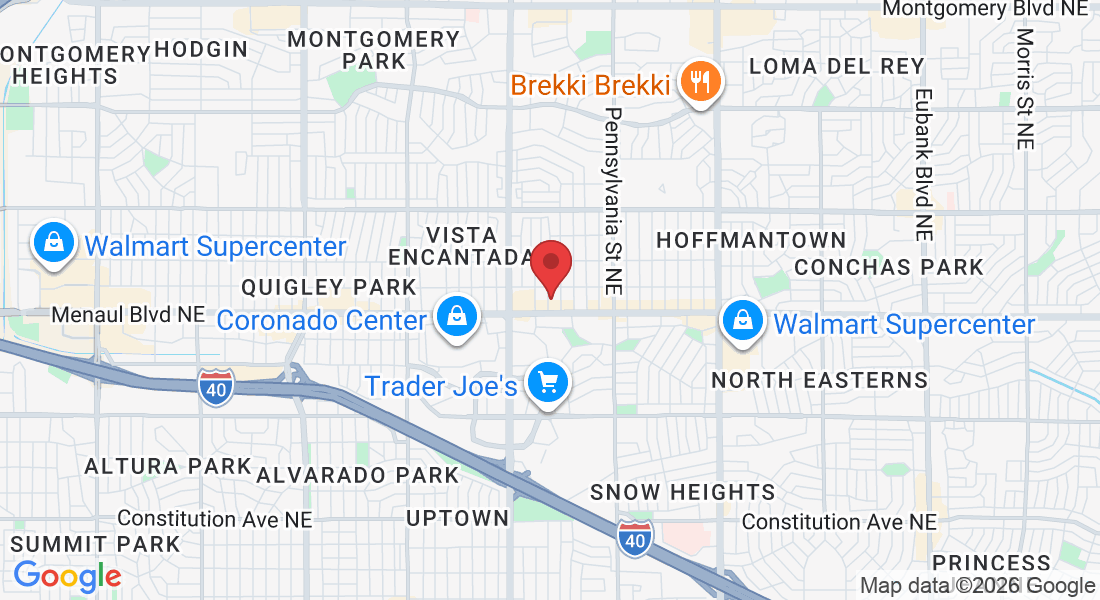
In-person location: 2616 Mesilla St NE, Albuquerque, NM 87110 (near Uptown).
Online EMDR: Available for anyone located in New Mexico via HIPAA-compliant telehealth. Online EMDR is effective — bilateral stimulation can be delivered through screen-based visual tools or self-tapping techniques.

Why Choose Rise Above Therapy for EMDR
EMDRIA-approved trained therapists on staff — EMDR requires specific certification through EMDR International Association (EMDRIA). We only offer EMDR through therapists with proper training.
-Trained in the full 8-phase EMDR protocol
-Trauma-informed approach across the entire practice
-EMDR for children, teens, and adults (per team qualifications)
-Both in-person (Albuquerque) and online (statewide NM) available
-Most major insurances accepted
-Warm, nonjudgmental, culturally responsive care
-Convenient Uptown Albuquerque location serving Rio Rancho, Northeast Heights, Nob Hill, and surrounding areas
Related specialty pages: Trauma Therapy in Albuquerque | Anxiety Therapy in Albuquerque
Why Choose Rise Above Therapy for EMDR
EMDRIA-approved trained therapists on staff — EMDR requires specific certification through EMDR International Association (EMDRIA). We only offer EMDR through therapists with proper training.
-Trained in the full 8-phase EMDR protocol
-Trauma-informed approach across the entire practice
-EMDR for children, teens, and adults (per team qualifications)
-Both in-person (Albuquerque) and online (statewide NM) available
-Most major insurances accepted
-Warm, nonjudgmental, culturally responsive care
-Convenient Uptown Albuquerque location serving Rio Rancho, Northeast Heights, Nob Hill, and surrounding areas
Related specialty pages: Trauma Therapy in Albuquerque | Anxiety Therapy in Albuquerque
Frequently Asked Questions About EMDR Therapy
What actually happens during an EMDR session?
You sit facing your therapist. Together, you identify a target memory and its associated belief and emotions. Then you focus briefly on the memory while your therapist guides you through sets of bilateral stimulation — usually following their fingers moving side to side with your eyes, though sometimes using tapping or audio tones. Between sets you share briefly what came up. This continues until the memory's emotional charge is significantly reduced. You stay fully aware and in control the entire time.
Does EMDR really work — or is it just pseudoscience?
EMDR has more research support for treating PTSD than any other therapy modality. It's recommended as a first-line treatment for trauma by the World Health Organization, the American Psychiatric Association, the U.S. Department of Veterans Affairs, and the U.K. National Institute for Health and Care Excellence. Over 30 randomized controlled trials support its effectiveness. The mechanism is still being studied, but the outcomes are well-documented.
Will I have to describe my trauma in detail?
No. This is one of EMDR's biggest advantages compared to some other trauma therapies. Your therapist needs to know the general nature of what you're targeting, but you don't have to narrate the events. Most of the session is quiet processing, not detailed storytelling.
How long does EMDR take to work?
Single-event trauma (like a car accident) often resolves in 6-12 sessions. Complex or childhood trauma typically takes 6 months to 2 years, depending on how many memories need reprocessing. Many clients notice meaningful shifts within their first few processing sessions, even if full treatment takes longer.
How is EMDR different from regular talk therapy?
Talk therapy engages the thinking part of your brain — helping you understand patterns and gain insight. EMDR engages the memory network where trauma is actually stored, helping you reprocess it at that level. Many clients find that EMDR shifts something talk therapy couldn't reach. Both have value; they're not opposites.
What if I've tried therapy before and it didn't work?
This is one of the most common reasons people come to EMDR. Talk therapy often helps you understand your patterns but doesn't fully resolve the underlying emotional charge. EMDR is designed to reach that deeper level. Many clients who've done years of talk therapy report that EMDR produced shifts talk therapy couldn't.
Can EMDR help with things other than trauma?
Yes. While it's best known for trauma and PTSD, EMDR is also used for anxiety with specific origins, phobias, panic disorder, grief, chronic negative self-beliefs, performance anxiety, and attachment wounds. Anywhere a current distress can be traced back to specific experiences, EMDR may help.
Is EMDR safe? Are there side effects?
EMDR is considered safe when delivered by a properly trained therapist. The most common short-term effect is feeling tired or emotionally raw after processing sessions — most clients recover within a day. Some clients notice memories, dreams, or insights surfacing between sessions. Your therapist provides tools for managing what comes up.
Do you offer online EMDR therapy in New Mexico?
Yes. We offer online EMDR sessions to anyone located in New Mexico. Bilateral stimulation is delivered through screen-based visual tools or guided self-tapping. Online EMDR is well-researched and effective for most clients.
Do you accept insurance for EMDR therapy?
Yes. We're in-network with Blue Cross Blue Shield of New Mexico, Presbyterian, and UnitedHealthcare Medicaid and Commercial Plans. Because EMDR sessions are often longer than standard sessions, coverage can vary — call us at (505) 588-7571 to verify your specific plan.
Frequently Asked Questions About EMDR Therapy
What actually happens during an EMDR session?
You sit facing your therapist. Together, you identify a target memory and its associated belief and emotions. Then you focus briefly on the memory while your therapist guides you through sets of bilateral stimulation — usually following their fingers moving side to side with your eyes, though sometimes using tapping or audio tones. Between sets you share briefly what came up. This continues until the memory's emotional charge is significantly reduced. You stay fully aware and in control the entire time.
Does EMDR really work — or is it just pseudoscience?
EMDR has more research support for treating PTSD than any other therapy modality. It's recommended as a first-line treatment for trauma by the World Health Organization, the American Psychiatric Association, the U.S. Department of Veterans Affairs, and the U.K. National Institute for Health and Care Excellence. Over 30 randomized controlled trials support its effectiveness. The mechanism is still being studied, but the outcomes are well-documented.
Will I have to describe my trauma in detail?
No. This is one of EMDR's biggest advantages compared to some other trauma therapies. Your therapist needs to know the general nature of what you're targeting, but you don't have to narrate the events. Most of the session is quiet processing, not detailed storytelling.
How long does EMDR take to work?
Single-event trauma (like a car accident) often resolves in 6-12 sessions. Complex or childhood trauma typically takes 6 months to 2 years, depending on how many memories need reprocessing. Many clients notice meaningful shifts within their first few processing sessions, even if full treatment takes longer.
How is EMDR different from regular talk therapy?
Talk therapy engages the thinking part of your brain — helping you understand patterns and gain insight. EMDR engages the memory network where trauma is actually stored, helping you reprocess it at that level. Many clients find that EMDR shifts something talk therapy couldn't reach. Both have value; they're not opposites.
What if I've tried therapy before and it didn't work?
This is one of the most common reasons people come to EMDR. Talk therapy often helps you understand your patterns but doesn't fully resolve the underlying emotional charge. EMDR is designed to reach that deeper level. Many clients who've done years of talk therapy report that EMDR produced shifts talk therapy couldn't.
Can EMDR help with things other than trauma?
Yes. While it's best known for trauma and PTSD, EMDR is also used for anxiety with specific origins, phobias, panic disorder, grief, chronic negative self-beliefs, performance anxiety, and attachment wounds. Anywhere a current distress can be traced back to specific experiences, EMDR may help.
Is EMDR safe? Are there side effects?
EMDR is considered safe when delivered by a properly trained therapist. The most common short-term effect is feeling tired or emotionally raw after processing sessions — most clients recover within a day. Some clients notice memories, dreams, or insights surfacing between sessions. Your therapist provides tools for managing what comes up.
Do you offer online EMDR therapy in New Mexico?
Yes. We offer online EMDR sessions to anyone located in New Mexico. Bilateral stimulation is delivered through screen-based visual tools or guided self-tapping. Online EMDR is well-researched and effective for most clients.
Do you accept insurance for EMDR therapy?
Yes. We're in-network with Blue Cross Blue Shield of New Mexico, Presbyterian, and UnitedHealthcare Medicaid and Commercial Plans. Because EMDR sessions are often longer than standard sessions, coverage can vary — call us at (505) 588-7571 to verify your specific plan.
Ready to Try EMDR?
You don't have to keep working around the same triggers, the same memories, the same reactions.
EMDR can help you actually process what's been stuck — often in less time than you'd expect.
Call (505) 588-7571 or book a free 15-minute consultation online. We'll match you with an EMDR-trained therapist who fits your needs.
Ready to Try EMDR?
You don't have to keep working around the same triggers, the same memories, the same reactions.
EMDR can help you actually process what's been stuck — often in less time than you'd expect.
Call (505) 588-7571 or book a free 15-minute consultation online. We'll match you with an EMDR-trained therapist who fits your needs.
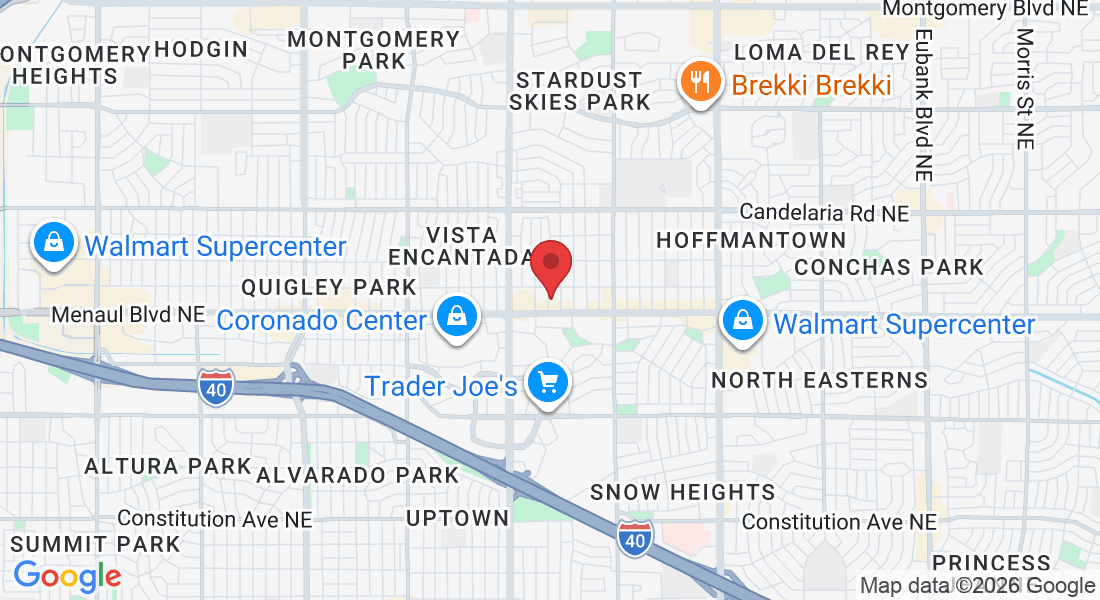

Address: 2616 Mesilla St NE, Albuquerque, NM 87110


Powered by Enchantment Marketing